Thursday, May 28, 2020

HammerHack: OD&D/Chainmail inspired Warhammer Fantasy Battles

David Gallagher
It's been some time since I've posted but I haven't been idle! So yes, what is HammerHack? This is an attempt for me to hack together a system to scratch a particular itch that I have. To explain, I’m quite a big OD&D fan. I love the history and the almost Promethean nature of the original game. I love how the system almost disappears in play. One of the more interesting aspects of it is Chainmail and the modern push (it’s my understanding that it was never played this way originally) to incorporate and use it in-game. The push that follows a completely different mindset and would let tables smoothly transition from tense duels, battling fantastic foes, and battles with hundreds of participants all using unified systems. 

Psionic Blast From The Past was a huge inspiration in this regard. Their posts on Chainmail and how it can simplify and diversify 0e conflicts are amazing stuff. Go check them out! 

One of my favorites, but doesn't hit my goals here.
I tried one such OD&D/Chainmail combo and very much enjoyed it. I immediately wanted to apply the concept to another game that has its roots in wargaming: Warhammer Fantasy Battles! WFRP is all well and good (and 1e will always have a place in my heart and shelf), but aspects of the game always left me wanting. The magic system was always a tad wonky, the combat could be whiffed for days, and the rules are a bit dense for my liking. Even the new game, with excellent art, atmosphere, and rules is a bit much for me. It’s good for a “piss and shit” type game where you’re ok with the system hating the players, but I wanted to capture some of the outrageous and truly exaggerated scale of Warhammer Fantasy Battles. 

Art by John Blanche
So, much like OD&D emerging from Chainmail’s concepts and mechanics, I’m taking WFB and making it my mechanical base. From there I’m adding some bits on characters, progression, adjudicating rolls, and a small variety of the more “lite” OSR rules/mechanics that I think can go big (for example, Into the Odd has rules on enterprises which are just a paragraph but can cover anything from cults to business to guilds and more).

Fortunately, Mordheim exists, as does WFB 1e. Mordheim in particular is a scaled-down and more individual-focused take on WFB’s mechanics. I think that it’s a good final piece for my “RPG based on Warhammer using only d6 scaling combat” puzzle.

The setting of Mordheim also makes for an interesting testbed and proof-of-concept with groups of adventurers exploring a hostile environment, gaining treasure, recruiting followers, and contending in conflicts of escalating scale and stakes. 

The non-focused version of this will be HammerHack, but for now, it’ll be called The City of the Damned. Check out my thought stew below. 

Click the art for the link to the rules!

Sunday, March 22, 2020

Far Over Wood & Mountain Tall: Middle-earth in Whitehack Part II

Jon Hodgson

So last time, we looked at how to use the existing tools in Whitehack to attempt an 'authentic' themed Middle-earth game. We covered changed stats, new classes, and how to reward quests that take companies far abroad. We'll continue our Whitehack adaptation of The One Ring and this time around we'll tackle the Shadow.

The Shadow

Whitehack already has some nifty rules for handling corruption. It basically involves a scale from 1-10 and above. There's an ever-increasing gamble with effects lasting longer and effects building based on when you choose to save. Wait too long to make your saving throw and your corruption might get too high to avoid permanent effects. We can use this nicely, we'll just have to look at how to systematize ways that a character in Middle-earth might be affected (this isn't chaos wizards turning into slime mutants after all).

(A little bit of commentary: you'll notice that compared to a "traditional" fantasy adventure game which sees the characters throwing themselves into any hellhole or haunted crypt they can find, the below rules will seem relatively harsh. The penalties of the Shadow can be long-lasting or even permanent. Dealing with a haunted crypt could be a harrowing experience. Finding an orc camp could change someone for life. This is intentional. Journeys are no small feat and any encounters during will be quite impactful. You'll probably have one or two a year and the experience will change you. These are dark times after all!).

So what is the Shadow? It's the weight of the presence of the forces of darkness in Middle-earth. It's the dread that weighs heavy on the hearts of most of the peoples of Middle-earth. Peoples to the South and East have fallen to it in multitudes. Sauron might be closer to victory than any dare dread!
But there is always hope and our intrepid need to be steadfast against this dread. So here are the triggers that can cause a character to gain Shadow Levels (SL):
  • Anguish - Experiencing distressing events. 
  • Blighted Places - Going through or being in an area tainted by the Shadow.
  • Misdeeds - Committing despicable and dishonorable deeds.
  • Tainted Treasures - Some items and treasure might be tainted or cursed.

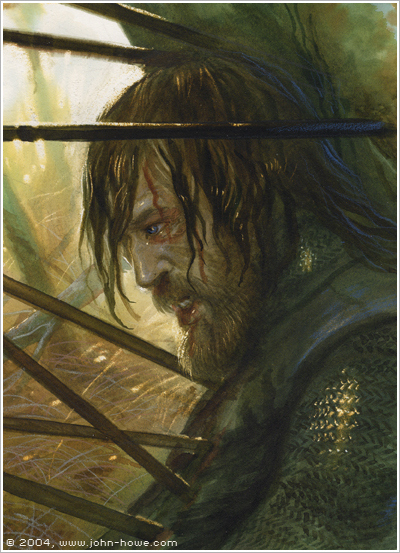
Khamul by John Howe
Then suddenly he knew that he was imprisoned, caught hopelessly; he was in a barrow. A Barrow-wight had taken him, and he was probably already under the dreadful spells of the Barrow-wights about which whispered tales spoke.

- J.R.R. Tolkien, The Fellowship of the Ring

Anguish

The light is fading and characters will quickly realize just how fragile they and the world they know really are. Witnessing or directly experiencing a disturbing or distressing event causes a character to gain Shadow Levels. The table to should work together to determine how severe an event is using the following guidelines:
  • A natural but unexpected tragedy or grievous occurrence (serious or deadly accident, death in the family, natural disaster). Make a save vs Shadow or gain 1 SL. 
  • A gruesome killing, dreadful experience, Orc-work, display of the power of the Enemy (a friend turned traitor, finding mutilated corpses, seeing an army of the Enemy mustering). Automatically gain 1 SL. 
  • A harrowing experience, physical or spiritual torment, the sorcery of the enemy (slavery, torture, the Black Breath, seeing the Eye). Gain 2 SL. 
  • A direct experience with the power of the enemy (Being interrogated by the Eye, captured by the Nazgûl). Gain 3 SL. 

Jon Hodgson

As their eyes became used to the dimness they could see a little way to either side in a sort of darkened green glimmer. Occasionally a slender beam of sun that had the luck to slip in through some opening in the leaves far above, and still more luck in not being caught in the tangled boughs and matted twigs beneath, stabbed down thin and bright before them. But this was seldom, and it soon ceased altogether. There was no movement of air down under the forest-roof, and it was everlastingly still and dark and stuffy and our heroes felt that they were being slowly suffocated.    
- J.R.R. Tolkien, The Hobbit

Blighted Places

The dark seems thicker in the lair of a foul creature and the gloom hands around sites of black treachery. Grief, pain, and suffering never leave the black pits inhabited by the servants of the Dark Lord or the plains where bloody battles were once fought. When characters enter or linger an area that has become blighted by darkness, they must make a save vs Shadow. If they fail they gain 1 SL. The Referee has the final say on whether a place is blighted or not and how frequent saves should be made while in said areas.
  • Free Lands, Border Lands - Frequency: save only during special circumstances.
  • Wild Lands - Frequency: save once every week. 
  • Shadow Lands - Frequency: save once daily.
  • Dark Lands - Frequency: save twice a day.
If you want to randomly determine if an area is blighted, roll for it. Roll 1d6 for Free/Borderlands, 2d6 for Wild Lands, and so on. If any die rolls a six, the area is blighted and requires saves as listed above. Areas that have long been home to minions of the Dark Lord or are currently infested by them, villages that have had a horrible murder or act of treachery, or places that are having their spirit poisoned by dark sorcery are great examples of Blighted Places. 

Boromir by John Howe
'Why not get rid of it? Why not be free of your doubt and fear? You can lay the blame on me, if you will. You can say that I was too strong and took it by force. For I am too strong for you, halfling,' he cried; and suddenly he sprang over the stone and leaped at Frodo. 

- J.R.R. Tolkien, The Fellowship of the Ring 

Misdeeds

Even the greatest and most virtuous of heroes can be tempted into dark actions. Misdeeds that would call their character into question. This can be the result of accident or misunderstanding, but also the temptation to do noble goals by dark means. Characters must stand fast against the dark impulses within. 

There are no saves vs Shadow when it comes to Misdeeds. When you knowingly embrace the Shadow, there is no temptation to resist. Even attempting something despicable is a misdeed, regardless of its success.

If a player is unaware of a Misdeed (ex. ambush and kill someone they believed to be guilty of a brutal murder, only for them to innocent), they should not immediately gain SL. Their behavior when the mistake comes to light should be used to determine whether they should gain the SL or not.

The Referee should warn a player if they are about to carry out a misdeed. Use the following guidelines to determine severity:
  • Accidental misdeed. See above. 
  • Violent threats. Gain 1 SL. 
  • Lying purposefully, subtly manipulating the will of others. Gain 2 SL. 
  • Cowardice, theft and plunder. Gain 3 SL. 
  • Unprovoked aggression, abusing own authority to influence or dominate. Gain 4 SL.
  • Torment and torture, murder. Gain 5 SL. 

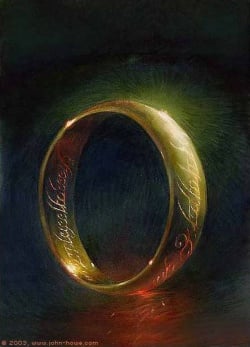
The One Ring by John Howe

There for ages his huge bones could be seen in calm weather amid the ruined piles of the old town. But few dared to cross the cursed spot, and none dared to dive into the shivering water or recover the precious stones that fell from his rotting carcass.
- J.R.R. Tolkien, The Hobbit 

Tainted Treasures

While gold can't tarnish like silver or rust like iron, it can corrupt faster than both. The treasure found in the lair of some dead monster or buried in a tomb long-sealed may be tainted. Such treasures can drive men to distraction and fill hearts with greed.

When such treasure is found, characters must make a save vs Shadow or gain SL.
  • From a Troll hoard - 1 SL
  • From a Dragon hoard - 1 SL
  • From an ancient barrow - 2 SL
  • From a stronghold of the Enemy - 1 SL before save, 3 more SL if save fails

Effects of the Shadow

The traits from this type of corruption aren't your typical chaos mutations or anything. These are character flaws and traits. Inner faults that the Shadow exploits and twists to the surface. Use list below for inspiration. 

These traits go from minor and fleeting to more troublesome and major. A character should stick to one or two of this listings and progress along them as they (hopefully) deal with their corruption. 
  1. Spiteful, Brutal, Cruel, Murderous
  2. Grasping, Mistrustful, Deceitful, Thieving
  3. Resentful, Arrogant, Overonfident, Tyrannical
  4. Haughty, Scornful, Scheming, Treacherous
  5. Idle, Forgetful, Uncaring, Cowardly 
As you can see, a corrupted PC is no mutant or direct evil. Think of a PC being in a fey mood for a day or two. Perhaps during the least few weeks of a journey, a PC is disastrously overconfident. Maybe there is even an ultimate act of betrayal or treachery from someone as their Shadow overtakes them. 

Well, this was a little longer than expected. This should cover handling the Shadow from the One Ring in Whitehack. We'll have to do a third post covering journeys (and maybe an extra one on enemies and evil play). 

Wednesday, March 11, 2020

Far Over Wood & Mountain Tall: Middle-earth in Whitehack Part I

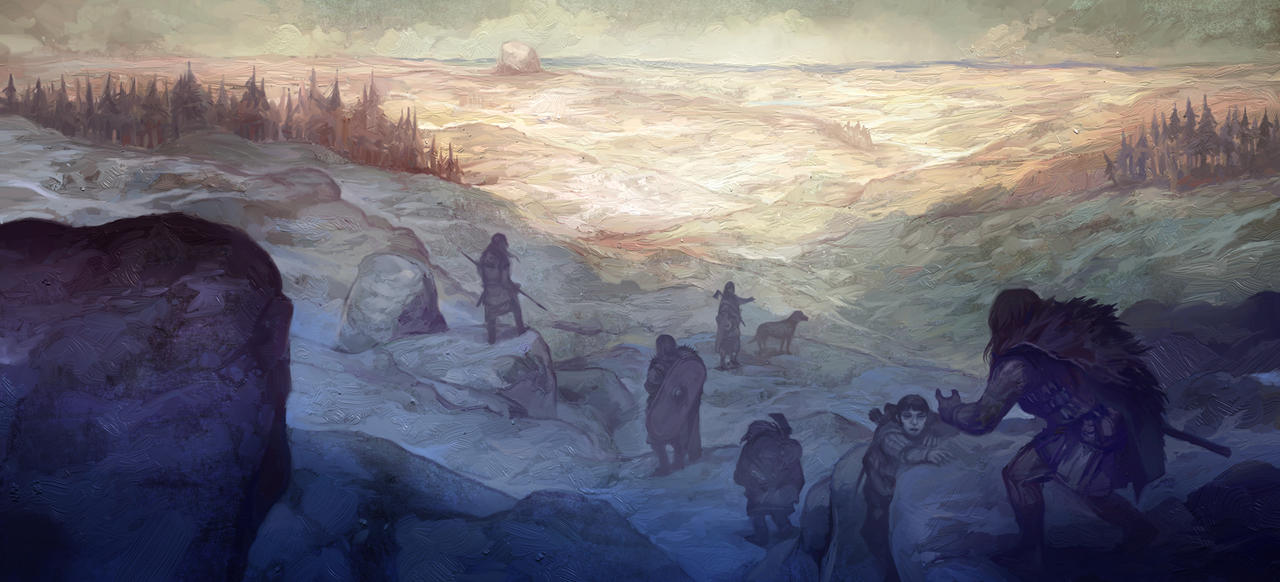
Descending the Misty Mountains by Jon Hodgson
Farewell we call to hearth and hall! Though wind may blow and rain may fall, We must away ere break of day Far over wood and mountain tall. 
To Rivendell, where Elves yet dwell In glades beneath the misty fell, Through moor and waste we ride in haste, And whither then we cannot tell.
With foes ahead, behind us dread, Beneath the sky shall be our bed, Until at last our toil be passed, Our journey done, our errand sped.

We must away! We must away! We ride before the break of day!
- J.R.R. Tolkien, The Fellowship of the Ring
My my it has been a while. Finishing university and starting a new job can take the time away like nothing else. Gaming has been good though so back to projects and ideas I go!

Whitehack has a wonderfully large array of tools to work with when it comes to using it to tackle various settings and concepts. I'm currently several sessions into a Bronze Age Dark Souls hack that is working perfectly. I'm quite surprised that I've never thought to use it to tackle my favorite literary setting, Middle-earth. It's a chance to flex some system mastery and get around using the ideas and concepts I've picked up from the One Ring in a more OSR-flavored environment. So let's see how much we can do using the options and tools in Whitehack for this shall we?

Things to Tackle

I want to keep the elements I think are important to OSR style play (open world, exploration-centered rewards, emphasis on player skill, etc.) while having a lot of concepts I consider to be important to a Tolkienesque feel that can really capitalize on said elements (longer time spans, journeys, less emphasis on combat, magic that is magical).
  • Attributes
  • Classes & Groups
  • Rewards
  • The Shadow
  • Journeys & Travel

Attributes

We can use the rules for custom attributes we can change the traditional six into stats a little more thematic and fitting. In our case we can roll with the One Ring trio: Body, Heart, and Wits.
  • Body governs just about anything concerning the physical or your vigor. Being hardy, athletic, tall, swift, imposing, or even using your physical attractiveness fall under Body. 
  • Heart governs the character's capacity for emotion or enthusiasm. Anything using temper, energy, fiery passion, or intense determination falls under Heart. 
  • Wits governs the character's quick thinking and ability to be clever. Being attentive, strong-willed, alert, and vigilant falls under Wits.
Having fewer attributes does mean task rolls will be easier. A higher attribute will be more likely the larger the party is. This is largely fine as the nature of trained and untrained skills will help even things out. A character who has high Heart trying to sing a moving song will have a hard time if they aren't "trained" (i.e. they don't have a relevant group by Heart). I'd recommend that the Referee be a little more strict on what Groups are relevant for what tasks and what tasks rolls require a "Trained Roll". 
Wilibald Proudneck is a Level 1 Brave Hobbit Farmer. He has "Hobbit" and "Farmer" next to Wits. If he was trying to treat the injuries of a friend, the Referee would call for a Trained Roll. "Hobbit", not "Farmer", allows Wilibald to not only dodge the Double Negative penalty but to make a Double Positive Roll. 
The standard Custom Attribute (see above link) rules apply here. No characters get bonuses for high attributes and no task or action requires a hard coded attribute roll. Attributes are rolled in order, then bonuses are rolled. Even characters with high stats can get large bonuses! Some suggested general bonuses could be:
  • Body: +1 damage, +1 initiative, +1 HP
  • Heart: +1 to saves vs fear, +1 to saves vs Shadow, +1 to saves vs death
  • Wits: +1 initiative, +1 language, +1 inactive ability
But nothing is set in stone and the above isn't comprehensive! As usual, take player suggestions on bonuses when rolling. It's a very informal process that can really bring out unique characters. 
Wilibad succeeded on a bonus roll against Wits with a crit! He suggests that he get a +2 bonus to initiative for being quick to act and the Referee agrees. He also succeeded on his other bonus roll against Heart. The Referee suggests that he get a +1 bonus to saves vs death to represent his determination to carry on.  
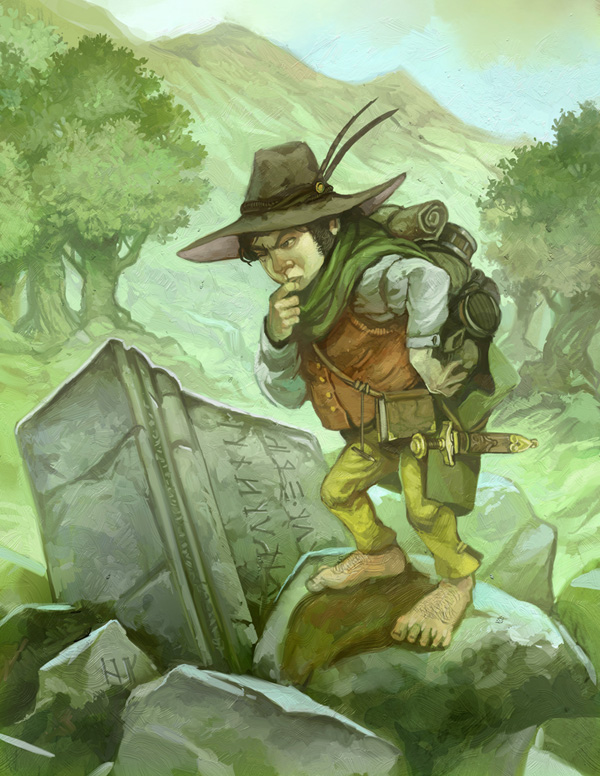
Hobbit Scholar by Jon Hodgson

Classes & Groups

'For this is what your folk would call magic. I believe; though I do not understand clearly what they mean; and they seem also to use the same word of the deceits of the Enemy. But this, if you will, is the magic of Galadriel. Did you not say that you wished to see Elf-magic? '
'I did,' said Sam, trembling a little between fear and curiosity. `I'll have a peep, Lady, if you're willing.'
- J.R.R. Tolkien, The Fellowship of the Ring
Magic in Middle-earth seems to very be subtle and natural(not "low magic"). Overt supernatural abilities should few and far between. The Deft's ability to easily best difficult circumstances and attempt the nigh impossible seems to fit better than the Wise outright doing the impossible on the daily. For that reason, we'll be using three basic classes:
  • The Strong 
  • The Brave
  • The Deft
That' right! No Wise Wizards or Wise Black Númenóreans here (for now at least)! Also that goes well with the three main stats. We are going to look at Tolkien magic as an assortment of supernatural gifts and special permissions. I think this will help ease into a more subtle and more "natural" sense of magic when it comes up in play. A Deft Beorning attuned to the teachings of Beorn or a Deft Elf attuned to to their enchanted rope or fine cloak.

Concerning Species Groups, standard play would assume Humans, Elves, Dwarves, and Hobbits (perhaps a another post concerning Evil play might be needed?). Humans are the most common and get no Species group. Most Dwarves would put their Species next to Body and Heart. Elves would often go with Body and Wits. Hobbits would go with Heart and Wits most of the time. There are of course exceptions, but I think that is a solid base.

As always the Species Group governs the most common physical and cultural traits and doesn't mean that the species is a mono-culture. Remember that Dwarves and Hobbits should have a lower movement rate (MV). Affiliations can cover human tribes and social culture. Consider this conversion of the basic cultures in The One Ring, which goes over when the group would be relevant to gain a Double Positive Roll followed by what Trained Rolls it could qualify for:
  • Bardings: Relevant for task rolls that require great valour and a stout heart. Boating, old tales, smithing, swimming, trading, and wood working.
  • Beornings: Relevant for task rolls where you're injured or cornered by foes. Anduin lore, beast lore, cooking, fishing, mountaineering, and storytelling. 
  • Dwarves of the Lonely Mountain: Relevant for task rolls involving endurance or stubbornness. Fire-making, smithing, smoking, masonry, trading, and tunneling.
  • Elves of Mirkwood: Relevant for task rolls inside a forest, under the earth, or at night. Boating, Elven lore, fire making, Mirkwood lore, swimming, and wood working. 
  • Hobbits of the Shire: Relevant for task rolls involving a cheerful spirit or friendless between companions. Cooking, gardening, herbalism, smoking, storytelling, tunneling.
  • Woodman of the Wilderland: Relevant for task rolls during combat in the woods. Anduin lore, beast lore, fishing, herb lore, leech-craft, Mirkwood lore.
This could easily be extended to the other cultures such as the Dwarves from the Iron Mountains, Riders of Rohan, etc. 

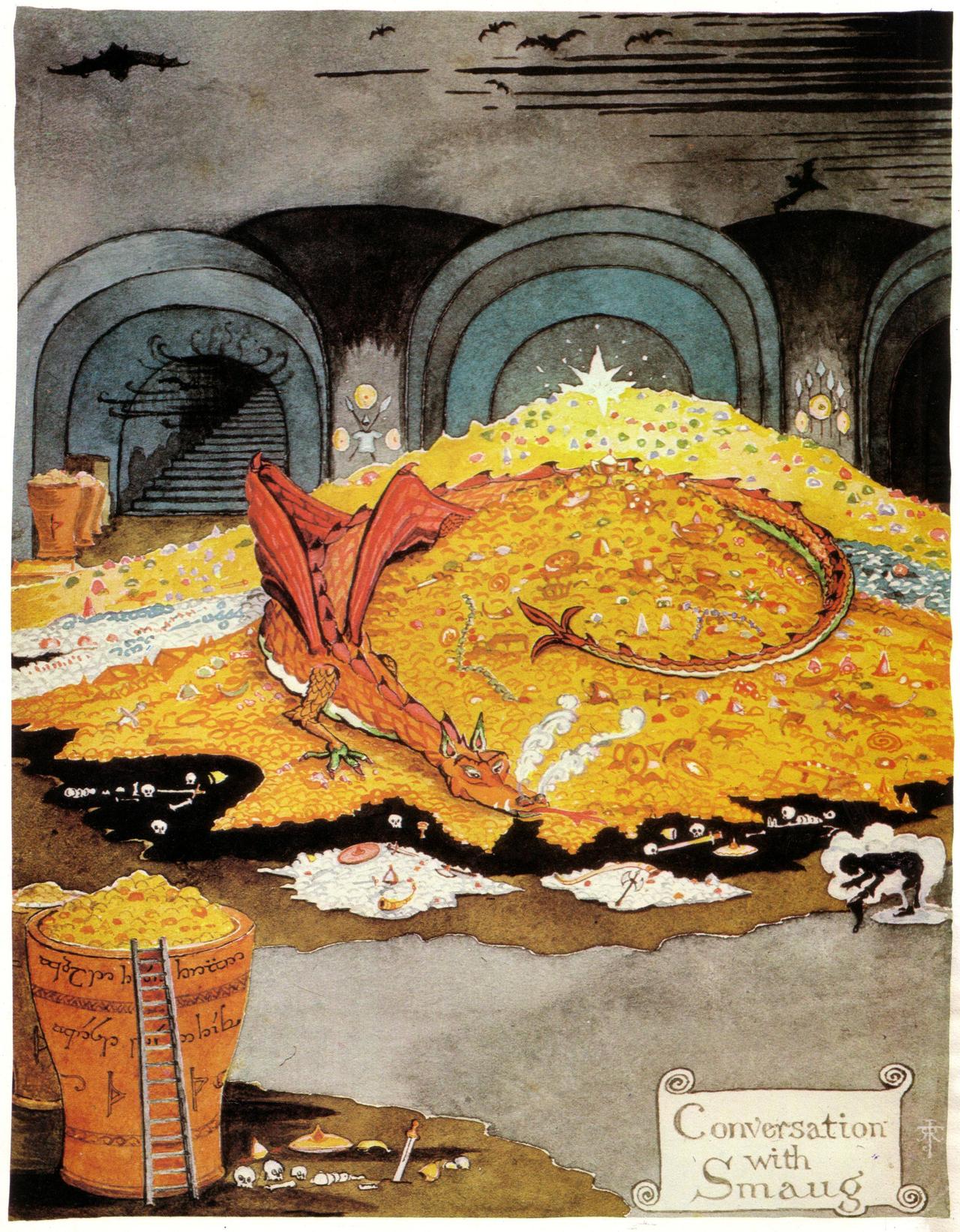
Conversation with Smaug by Tolkien

Rewards

Whitehack awards XP for treasure, killing foes, and completing quests. I feel like XP for Quests (maybe extend that to journeys?) is fitting, "killing foes" needs to be changed to "outsmarting, evading, or otherwise besting foes", and the XP for gold does have its place ("let's go rob Smaug"). In a Middle-earth game I think that most of the XP should come from thematically appropriate exploits. We'll develop this more when we talk about travel and journeys. 

The next post will cover said journeys as well as the dark and corrupting influence of the Shadow. 

Monday, November 18, 2019

Hegemon - The Phoenix Empire of Berytos


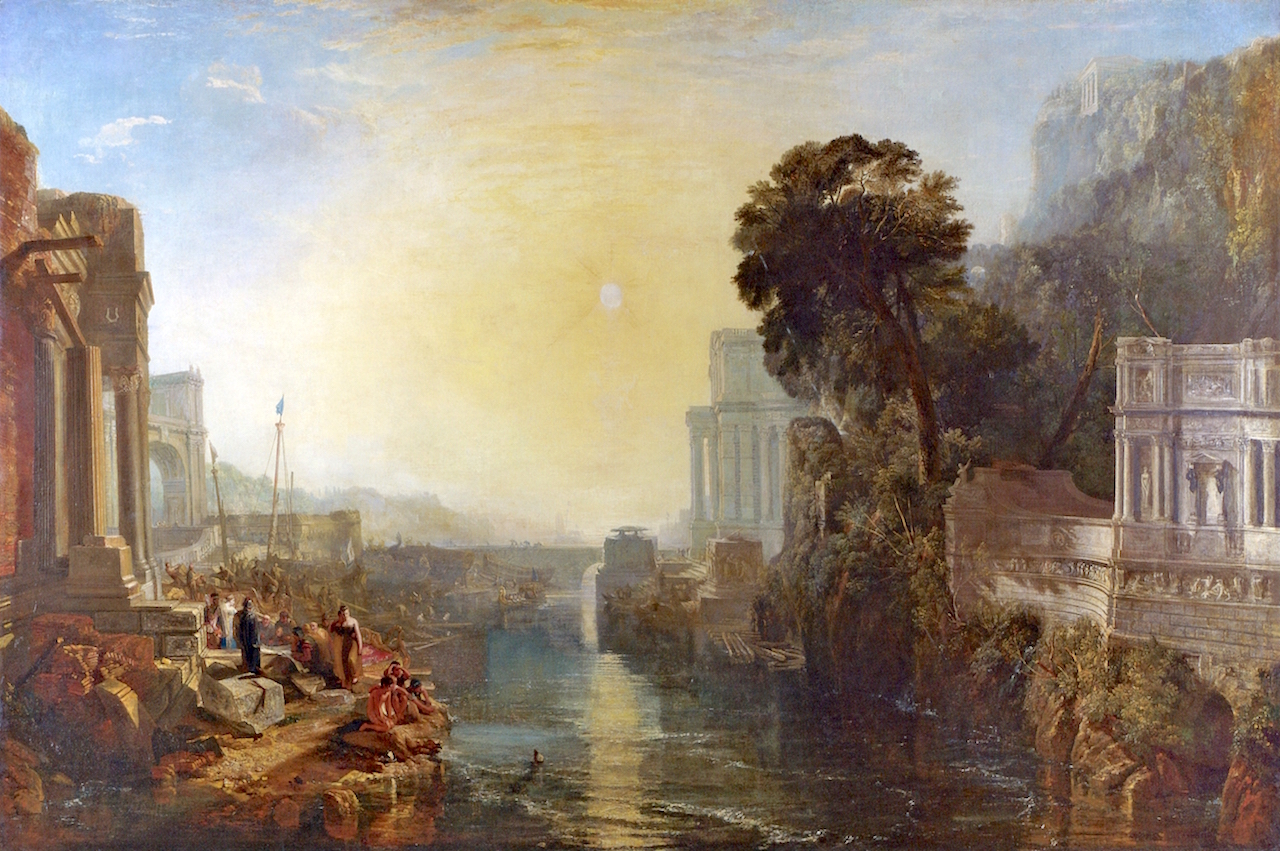
J. M. W. Turner, Dido building Carthage, or The Rise of the Carthaginian Empire, 1815

I'm running a Godbound campaign based heavily on ancient civilizations and their mythology inspired by the wonderful lore of some nations of the Dominion series by Illwinter, my favorite fantasy MMOs, and the awesome creations of Kevin Crawford. The result of this mesh of ideas has been a blast at the table so far and my fledgling pantheon of would-be divinities is already interacting with big players in the region. One of the factions that is featuring heavily so far Berytos, the Phoenix Empire, so I thought I'd explain their vibe and flesh them out. 

Berytos is mainly flavored after the Phoenicians and other Mediterranean seafaring peoples. Think sea peoples of Canaan, Phoenicians and Carthaginian and the cities of Byblos, Tyros, Sidon, and Carthage as important sources. Picture Carthage's founding and the Ba'al worship of the Canaanites.  

Their gist is that they're a literal "phoenix empire" that was destroyed and reemerged as a conglomerate of numerous coastal city states. It is a now cultural melting pot influenced by several other key players along the Telkios Sea. 

A Punic gilded bronze cuirass from Ksour Essaf, 3rd-2nd century BCE. (Bardo National Museum, Tunisia)

The Risen Phoenix

Even the most meager of chronicles of Creation before the Last War recounts the tale of Telkhines, titanic storm demons whose great civilization of Therodos once ruled the waves. The Telkhines ruled over the peoples of the coast and there these slaves learned great lore both ancient and terrible. From the Telkhines these servants learned of exquisite shipbuilding techniques, how to tame the tumultuous seas of Creation, and supreme mastery over metals mundane and impossible. 

This changed when the Pantokrator, the One, during their construction of the Heavens and their taming of Creation, struck down Telkhines for their obsession with Stygian magicks and threatening to prolong the Age of Chaos. The One sundered their bastions, drowned their cities, and the Telkhines were either slain or imprisoned in the lowest circles of Hell. The great Kingdom of Therodos was cast beneath the waves. 

When divine punishment was meted out, the mortal survivors of the now lost kingdom fled. Lead across the angered sea by the Storm Callers, greatest disciples of the Telkhines, some escaped the judgement. Though their might couldn't endure the ravages of the Last War, the echoes of this enclave lived on. Armed with the knowledge of iron-crafting and the magical might of the newest generation of the honored Storm Callers, new colonies were founded on distant shores. Like a phoenix, the dying empire was reborn.  

Much has changed since then. After the shattering of Creation and with their Telkhine gods either dead or shackled in Hell, the humans sought divine leadership. They found the Melqarts of grand Hinnom. One of the colonies was situated near Ashdod and the bloody cult of the Melqarts soon spread through the Phoenix Empire. In the capital colony of Berytos, a great temple to the Melqarts was built, the Temple of Fire and Storms.

But soon another power found its way into the cult. Refugee Colossi, great men of the Machakan royal family, arrived in Berytos and established themselves as rulers of the bloody cult. Their sorceresses claimed divinity and called themselves Brides-in-Waiting. Now Berytos is a seafaring people led by sorcerer-queens from the great temple in Berytos. Since then Berytos has been an accomplished practitioner of war, acquiring new territories and resources, and safeguarding its vast trade network in the Telkios Sea. 

Slowly, the prophecies are being fulfilled. Melqarts of Hinnom have come to claim their brides and feast on the blood of sacrifices. Now in the grand city of Berytos, a terrible queen and a fell king rule. 

Monday, July 8, 2019

Troika! - Shuffling around the Stygian Library

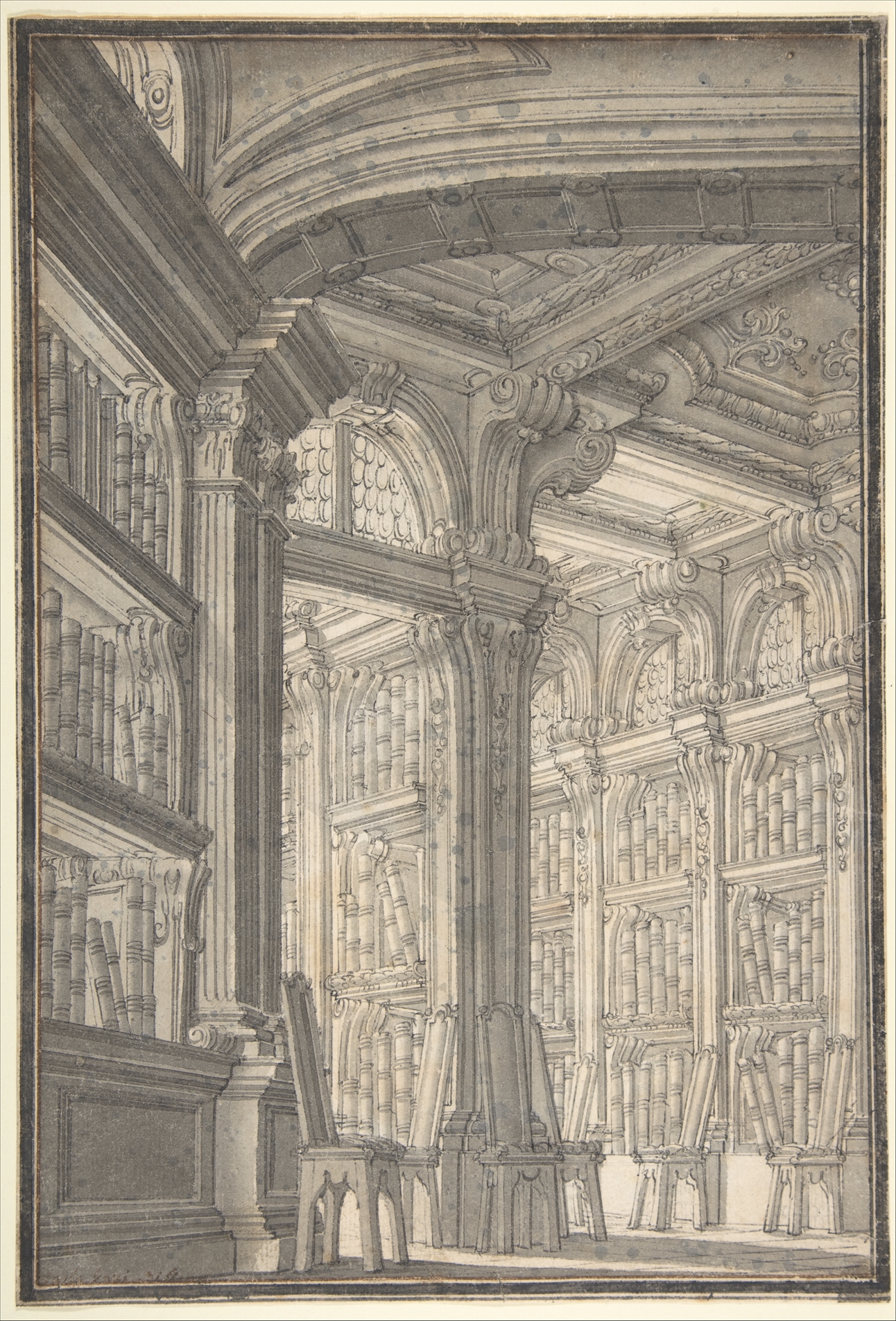
Ynn was so cool, I just had to take a look at The Stygian Library as a sphere in Troika! It's always nice when the methods of getting around the spheres are just as interesting as the destinations. Here's a new background and some beasties.

New Background: Mummified Sage


You're a professor and esteemed scholar. Or at least, you were. Exactly where you taught and even what subject are long forgotten trivialities since you discarded your mortality and life by venturing into the Library. Who knows what would motivate you to do such a thing, but since then you've spent many mortal lifetimes researching and gathering esoteric knowledge and interesting trivia. 

Possessions 

  • Fresh Change of Wrappings
  • 2d6 of your Favorite Books and Scrolls
  • Ragged Robes
  • Bootstrap with a Particularly Beefy Tome (Damage as Club)

Skills 

  • 3 Speed Reading
  • 2 Astrology
  • 2 Mathmology
  • 2 Pedagogy
  • 1 Evaluate
  • 1 Book Fighting
Special
You're not quite alive but you're not quite undead either. You don't need to breath or circulate blood. You take double Damage from Silver Weapons but recover Stamina as normal. 

You can read any written language. Your speaking skills are quite rusty though and leave much to be desired, most likely due to an millenia or two since you last held a decent conversation.

Due to the breadth of your studies you may Test your Luck to identify otherwise mysterious things encountered, such as unknown creatures, forgotten artefacts, unexplored locales, undocumented diseases, little-known historical figures, unseen art, etc. However, your knowledge on the practical and mundane pales in comparison.


Librarians

Skill: 7,  Stamina: 7, Initiative: 2, Damage as Unarmed

Mien: 
  1. Furtive
  2. Furtive
  3. Repairing
  4. Restoring
  5. Furtive
  6. Furtive
If the party is sufficiently destructive or rowdy in the Library, replace Furtive with Hostile.

Palid faces look out from voluminous robes as they scurry between the bookshelves. Once academics, their extended stay has warped them into the diminutive and emaciated keepers of the Library. Never tiring, never resting, they make sure the sheol computer is working and that the everything is as it should be in the endless depths of the Library.

Special
Librarians are immune to any mind-controlling effect that would interfere with their work.

If hidden behind a bookshelf, a Librarian may teleport to any other bookshelf in the Library as if there was no intervening space, so long as the start and end points are both unobserved.

Libraries all know the Jolt Spell. Depending on their order they know additional spells. Some suggestions include:

  1. Red Order - Breach, Levitate
  2. Yellow Order - Amity, True Seeing
  3. Black Order - Affix, Fear
  4. Grey Order - Exorcism, Posthumous Vitality 
  5. White Order - Invisibility, Undo


Friday, July 5, 2019

Troika! - Mucking about in the Gardens of Ynn


I recently picked up The Gardens of Ynn, a point-crawl adventure set in an ever-shifting extradimensional garden. Aside from pillaging it for my other games, I really wanted to use it as a weird sphere in Troika! But first, a background based off the Ynnian Changeling class and some converted critters.

New Background: Ynnian Changeling 


You've been marooned in the Gardens for quite some time. Perhaps you were a foolhardy adventurer or inquisitive gardener. Perhaps you wandered here as a child and have known nothing else. Trapped here in the Garden for so long, you've adapted to your new home a little too well and aren't entirely human anymore. On the bright side you're aren't entirely a strange vampiric fey yet! It's just that your tongue is forked and your skin is a tad pale (or is it mint green?). Your ears are a little more pointed, your limbs too long, and your hair is now a brilliant color. Your voice even seems to have an undertone of birdsong. And who knows how alien your physiology has truly become on the inside.

Possessions 

  • Hooked Nails & Numerous Needle Teeth (Damage as Knife)
  • Book of gardening techniques, poetic ramblings and strange doodles in the margins
  • Garden Tools and a Rusty Rake (Damage as Staff)
  • Worn Clothes, covered with growths of vines and flowers. +2 to Sneak rolls in vegetation.
  • Butterfly Wings (+1 Fly) or Strange Eyes (+4 Second Sight)

Skills 

  • 4 Language - Birdsong
  • 3 Gardening
  • 2 Claw Fighting
  • 2 Sneak
  • 2 Forage
  • 1 Climb
  • 1 Staff Fighting
Special
You don't recover Stamina by eating a Provision - instead you may consume a mouthful of blood (about 1d6 Stamina from any willing or unwilling volunteers) at most 3 times per day to recover an equivalent amount of Stamina. 

You cannot recover Stamina in sunlight but recover twice as effectively in darkness and are severely allergic to iron and holy objects. You take double damage from such sources and take damage while touching or carrying such objects. Don't even try to go on holy ground.  

If you are reduced to negative Stamina, instead of dying you are transformed into a patch of flowers or mushrooms growing where your body falls. Regain 1 Stamina twice per day (sunrise and sunset) until you are fully healed. You return to flesh when your Stamina is fully recovered or blood soaks into the ground you're growing in. A stake in the heart prevents this and freezes you at 0 Stamina until it is removed. Churning up the soil you're growing in destroys you forever.


White Apes 


Skill: 7,  Stamina: 9, Initiative: 2, Damage as Modest Beast

Mien: 
  1. Lazy
  2. Aggressive
  3. Feasting
  4. Hungry
  5. Territorial
  6. Crafty

Four armed albino apes with carnivorous tendencies. Having long gone feral, they carve out their territory with markings of dung and mutilated corpses turned grisly trophy. Not quite as smart as a human but they are familiar enough with crude tools and barbarism.

Clockwork Lawnmower 


Skill: 9,  Stamina: 15, Initiative: 1, Armour 2, Damage as Large Beast

Mien: 
  1. Malfunctioning
  2. Stuck
  3. Sparking
  4. Dormant
  5. Rampaging
  6. Mowing

Clanking and shuddering, these huge machines of steel lurche through the gardens using their whirling blades to trim the lawns. Their mindless nature often means that more than grass gets caught in their wild blades. 

Special: Takes twice as much damage from electricity but only half as much from fire.

Parasitic Wasp

Skill: 5,  Stamina: 5, Initiative: 2, Damage as Small Beast

Mien: 
  1. Collecting
  2. Attacking
  3. Hunting
  4. Nesting
  5. Patrolling
  6. Swarming

A predatory insect about a long as a your forearm. These vile creatures reproduce by laying eggs in an unfortunate living host. 

Special: Anyone stung by a wasp must test their Luck (or Skill for Enemies) or become paralyzed for 1d6 turns. Rather than stinging, the wasp can lay eggs inside its victim, allowing their larvae to eat them alive. They must Test their Luck (or Skill for Enemies) or lose 1 Stamina a turn (1d6 if paralyzed) for 1d6 turns. At the end of this duration, if they are dead, their body splits as a new wasp bursts forth. Otherwise, they have fought off the parasitic larvae which perishes within them.